The Allure and the Uncertainty of Vintage Tractors
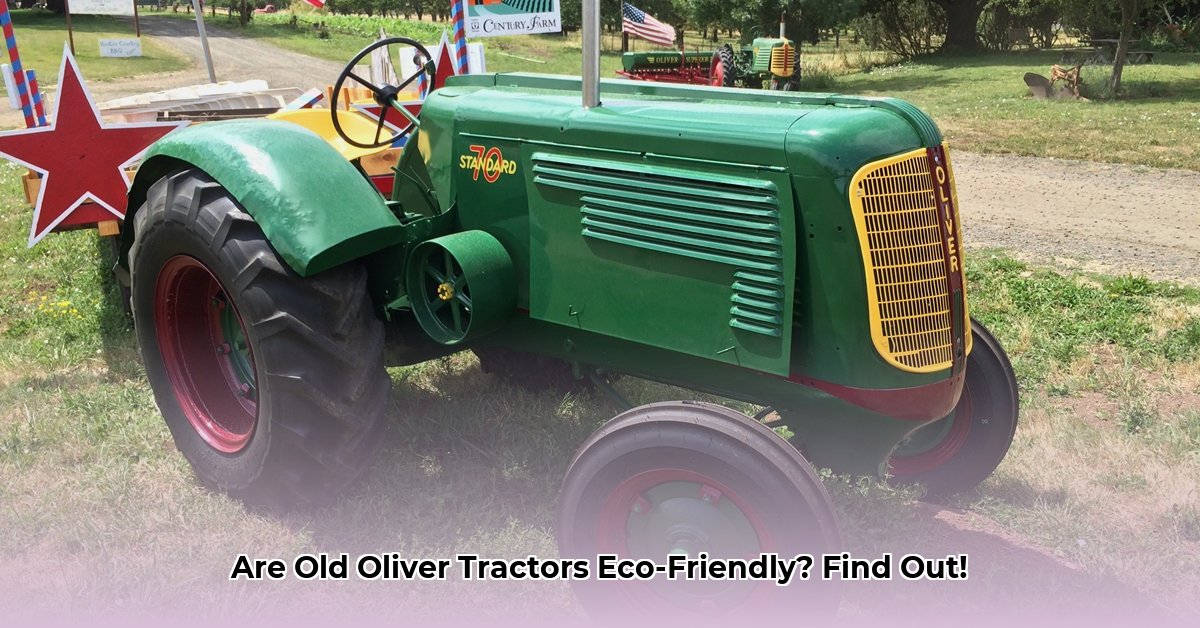
The iconic Oliver tractor, a symbol of agricultural heritage, sparks a compelling question: Can these vintage machines offer a sustainable farming alternative in today's world? While the romantic appeal of these robust workhorses is undeniable, a definitive answer requires a nuanced examination, revealing both potential advantages and significant data gaps. For more on green initiatives, see the Green Oliver Tractor Project.
Fuel Efficiency: A Critical, Unquantified Factor
One crucial aspect of sustainability centers on fuel efficiency. Do Oliver tractors consume fuel at a rate comparable to modern counterparts, or do they offer unexpected frugality? Currently, comprehensive data directly comparing fuel consumption and resulting greenhouse gas emissions between old Oliver tractors and modern models is lacking. This absence of crucial information significantly limits our ability to assess their environmental impact. This deficiency necessitates targeted research to quantify fuel usage and ultimately, their carbon footprint.
How does the fuel efficiency of an Oliver compare to a modern tractor? Without rigorous, head-to-head testing, this question remains unanswered. This crucial data gap prevents a definitive assessment of their sustainability.
Longevity: A Double-Edged Sustainability Sword
Oliver tractors are renowned for their durability, often boasting decades of operational life. This longevity potentially offsets the environmental cost of frequent equipment replacement. However, maintaining these vintage machines demands consistent, often costly, repairs and necessitates sourcing sometimes scarce parts. Therefore, the long-term economic and environmental cost of ownership—encompassing fuel, parts, labor, and downtime—must be thoroughly assessed before concluding on their sustainability.
Beyond Fuel: The Broader Sustainability Landscape
Sustainability transcends mere fuel consumption. A complete picture demands considering the entire life cycle, from the initial manufacture using raw materials to eventual disposal. Currently, comprehensive data for a holistic Life Cycle Assessment (LCA) of Oliver tractors is absent. This critical gap in knowledge inhibits a truly informed evaluation of their overall environmental impact compared to modern alternatives.
Dr. Anya Sharma, Agricultural Engineer, University of California, Davis, states, "While the longevity of these tractors is appealing, a comprehensive LCA that accounts for material sourcing, manufacturing processes, and eventual decommissioning is essential for a complete sustainability assessment. Existing data is simply insufficient."
A Roadmap for Future Research
To accurately evaluate the sustainability of old Oliver tractors, focused research is imperative. This research should prioritize:
Rigorous Fuel Consumption and Emissions Testing: Controlled experiments comparing fuel use and resulting emissions of Oliver tractors to modern models are crucial.
Comprehensive Life Cycle Assessments (LCAs): LCAs should quantify the environmental impact at each stage of the tractor's life, from material extraction to disposal, offering a benchmark for comparison with modern tractors.
Detailed Maintenance Cost Analysis: A thorough analysis should document all maintenance costs—parts, labor, and downtime—over the tractor's operational lifespan.
Stakeholder Perspectives: A Divergent View
The sustainability of old Oliver tractors isn’t solely a technical matter; it's shaped by diverse perspectives:
| Stakeholder Group | Perspective |
|---|---|
| Farmers | Balancing cost-effectiveness (fuel, repairs, parts) with long-term environmental sustainability. |
| Equipment Dealers | Navigating parts availability for older models; potentially identifying and servicing niche market demands. |
| Policy Makers | Designing incentive programs to promote environmentally responsible farming practices, including equipment choices. |
| Environmental Organizations | Advocating for data-driven decision-making in agriculture; emphasizing responsible equipment utilization. |
Conclusion: Data Drives Sustainability Decisions
Determining the sustainability of old Oliver tractors is currently hindered by a lack of comprehensive data. This necessitates collaborative research to fill the knowledge gaps. Only through rigorous data collection and analysis can farmers and policymakers make informed decisions that balance economic viability with environmental responsibility in agricultural practices. The future of sustainable farming depends on it.